Amazon.com Widgets

Welcoming the intruders


Purple Loosestrife

Purple Loosestrife, originally uploaded by cambodia4kidsorg

Popular opinion has treated the invasive plants as botanical illegal aliens. The Environmental Protection Agency has labeled them as the second-greatest threat to the continent’s biodiversity, exceeded in their impact only by outright destruction of habitat. Major resources have been devoted to the spraying and rooting-out of invasive plants in the belief that their removal would enable an ecological revival. Roughly $45 million, for example, is spent every year in the unsuccessful attempt to stop the spread of a single European wetland weed, purple loosestrife (Lythrum salicaria).

New research, however, suggests that invasive species, at least in some instances, aren’t so much the causes of environmental degradation as eco-opportunists taking advantage of disturbed habitats. Or, as the biologist Andrew MacDougall of the University of Guelph, Ontario, puts it, the invasives may behave more as “passengers” than as “drivers.”

From Can Weeds Help Solve the Climate Crisis? (NYTimes.com)

I’ve been involved in the past with the Western Pennsylvania Conservancy, a wonderful organization that maintains Fallingwater and acts as custodian for natural resources in this state. Several years ago, I attended a workshop on exotic invasive plants, like purple loosestrife, multiflora rose, orange day-lily, and English ivy among many others, and participated in a project to remove purple loosestrife from a stream near here. It was hard and discouraging work: We spent a day carefully cutting off and bagging plants, but made barely any impression in the space.

One frequently cited definition is that a weed is “a plant out of place.” Many of the invasive exotics were brought here originally by well-intentioned gardeners and home owners. Purple loosestrife is rather pretty, for example. But because these plants proliferate so quickly and widely, we view them as weeds.

Now I read in this article in the NY Times that removal efforts like the purple loosestrife project I worked on may indirectly hasten the decline of native species in the area:

For three years [biologist Andrew MacDougall of the University of Guelph] removed the invasive grasses from plots he outlined within [a Nature Conservancy Canada property on Vancouver Island]. In some plots, he did this by mowing or burning; in others, he removed the weeds entirely. Yet the native flora didn’t rebound significantly. In some cases, the decline of the native plant species instead accelerated, and the fundamental character of the flora within the plots began to change, with woody plants encroaching on the formerly open, grassy areas.

MacDougall concluded that rather than serving as drivers of change, the foreign grasses were functioning more in the role of passengers, merely filling in as the natives disappeared. In fact, the foreigners seemed to be serving a stabilizing role. By blocking light from reaching the soil, they inhibited the germination of tree and shrub seeds. Keeping the brush at bay in this fashion preserved the open character of the savanna habitat so that the remnants of the original savanna wildflowers, grasses and wildlife could at least survive. In light of these findings, MacDougall says, he came to believe that the primary cause of the native flora’s decline was human intervention. Before European settlement, fire periodically cleansed the soil surface of dead plant material. Suppression of fire since settlement had allowed a thick layer of litter to accumulate, and the foreign grasses cope better with this than do the natives.

This theary makes sense, yet it also raises the question of what we should do — or not do. It seems impossible to think of not trying to remove fast-growing plants; it’s too easy to imagine a South consumed by kudzu. But until we can find ways to reduce our production of carbon dioxide (which seems to encourage the growth of many other unwelcome plant species), we may find we need to lean on certain invasives to help us preserve other species.

Suddenly, these plants no longer seem quite like weeds any more.

Terms of Use

You may wet hard copies of these stories and wrap them on your self and let them dry, like papier-mâché. Afterwards the stories will have taken on the shape of your body.

From “Terms of Use” at Distorte

Hey, hey

The Monkees (View Original Article)

A bit of technical help needed: I have a DVD of family films from decades ago. They were originally Super 8 films that my dad had; I took them to Tom Graham of Frames and Pixels, and he put them all on DVD for me, and worked with me to edit them into sequential order. (All for an extremely reasonable price.)

There are some entertaining bits in there, including brief footage of me, aged 1, dancing in front of the television while watching The Monkees. OK, so maybe they’re entertaining only to me and a few others. Still, I’d like to get them online to share.

How to do that? I have the rights to the footage, just need to know the steps to clip a bit of video from a DVD and bring it into iMovie.

If you can offer guidance, please comment or send me an email. (See the Contact page.) Thank you!

Tags: ,

Regaining footing

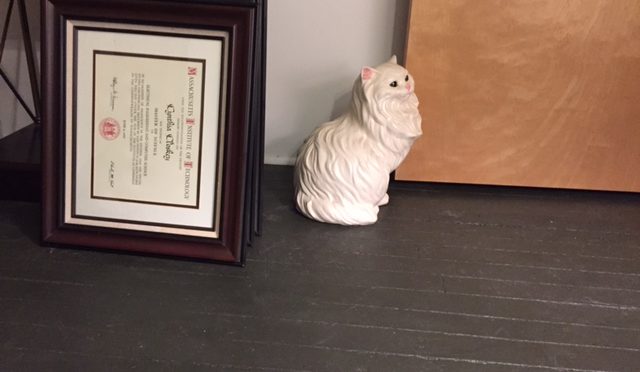
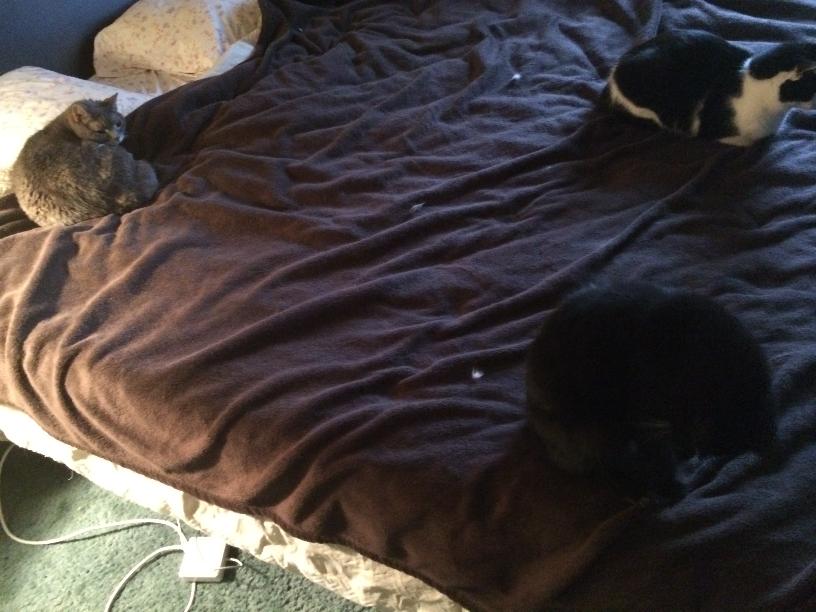
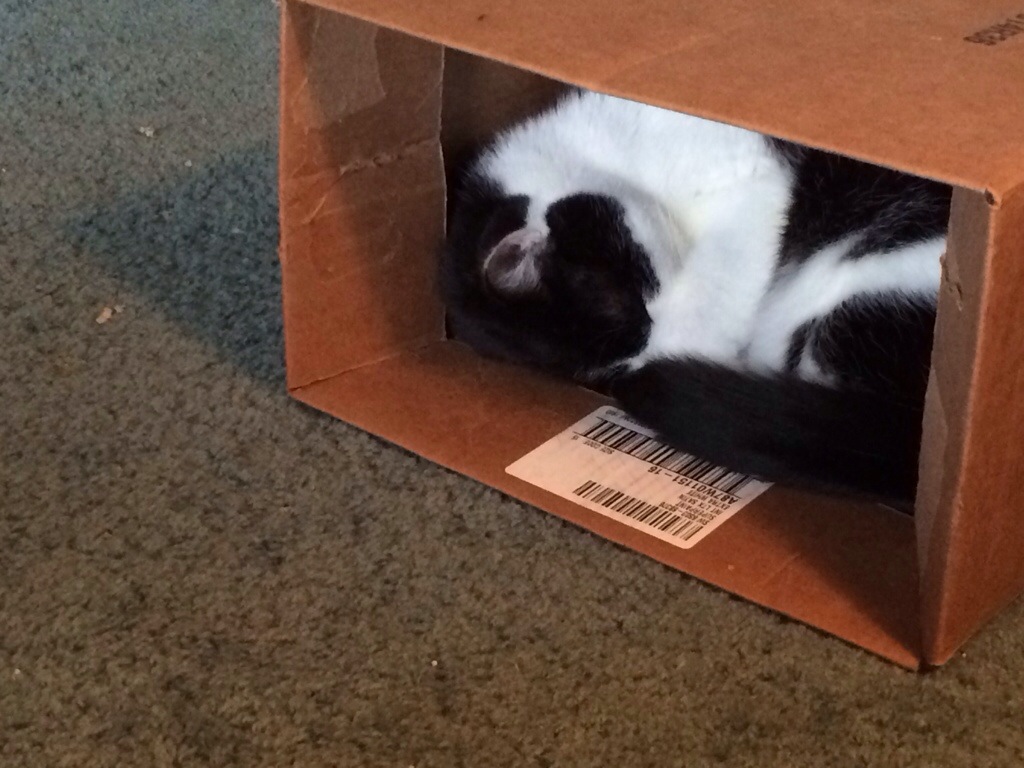
cat
more cat pictures

In the middle of wrapping up projects and starting new work. Back very soon.

(I can has thyme machine?)

Thinking Pennsylvanians, unite!

Regular readers of this site know I hold no love for the Pennsylvania Liquor Control Board and this state’s monopoly on wine and liquor sales. I’ve thought about starting a movement to get these things thrown out. It turns out I don’t need to, because someone else already has.

As part of this, he’s compiling a thoughtful and well-argued list of reasons the PLCB should be abolished. Here’s part of one reason — one that particularly gets my goat.

Reason #4: The Ridiculous 72-Year Old Emergency Tax

You may find this hard to believe, so here’s the proof, right off the PA Dept. of Revenue website. You’ll see at the bottom of the page that the cite is "Emergency Liquor Sales Tax Act, Act of June 9, 1936." The emergency has been over for 70 years, and of course, the money hasn’t gone to the citizens of Johnstown (or…the contractors hired to help the citizens of Johnstown) for many, many years: it goes to the General Fund. It’s just money the State is taking from you every time you buy booze.

The Emergency Tax is an amazing thing, kind of the creamy center of a towering cake of taxes Pennsylvanians pay when they buy booze. First, there’s the actual cost of the packaged beverage. The federal excise tax is added at the producer/importer level. Then the fun starts. The State imposes its set mark-up (for "profit", which in the case of so-called "control states" is really an additional tax, since it all goes to the State) of 30%. Now put that luscious Emergency Tax in there, adding 18% of the cost, the federal excise tax, and the 30% mark-up onto your bill. Think that’s rapacious? Wait, there’s more! That’s right, folks, now you get to add the 6% State sales tax (7% in Philadelphia County)! [Cindy’s note: and in Allegheny County as well.]

Let’s look at that. Say you get a bottle of 100 proof bottled-in-bond bourbon. Cost from producer: $10. Federal excise tax of just about $2.50 (it’s a set amount per gallon of 100 proof liquor; that’s why we bought bottled-in-bond):$12.50. The State’s mark-up of 30% is $3.75: $16.25. Now add the 18% Johnstown Flood Emergency Tax of $2.93 (note that it’s more than the federal tax): $19.18. Top it all off with the 6% sales tax you pay on computers, cars, books, pets, toilet paper (whoops — turns out PA doesn’t tax toilet paper; make that kleenex…which, believe it or not, was what I had there originally, and for some reason, changed it)– $1.15 — and you get a grand total of $20.33. That is more than twice the cost of the whiskey.

From Why The PLCB Should Be Abolished.

Tags: , ,